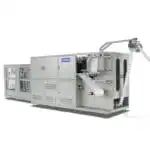
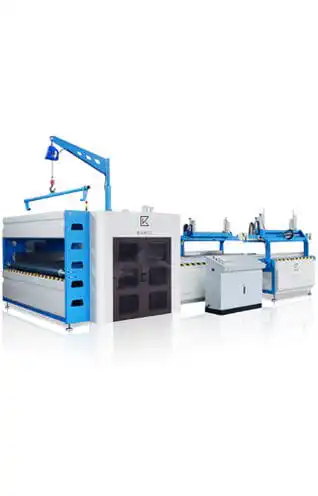
KIMKOO offer multiple types of pocket spring assembly machines — some can connect with 2 coilers, and others up to 3. Freely combine with pocket spring coiling machines of different speeds. Easily set up a 1-to-1, 1-to-2, or 1-to-3 production line to match your capacity. Customize your setup today!
Mattress Packaging Solutions Tailored to Your Needs
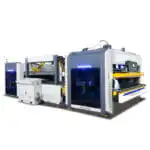
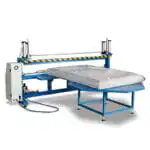
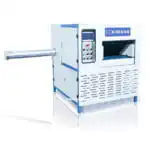
KIMKOO offers a versatile range of mattress packaging machines, with optional functions including auto bagging, compression, folding, and roll-packing. Whether you need to wrap, flatten, fold, or roll, our solutions help protect your mattresses, save space, and improve packaging efficiency. Designed to fit various mattress types and workflows.
Compress & Roll Pack Sofas, Foam, and Mattresses with Ease
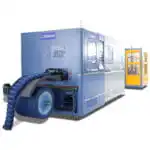
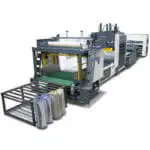
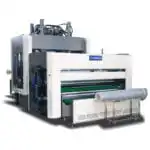
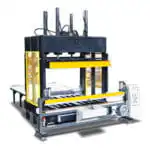
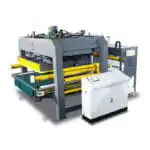
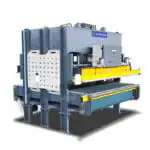
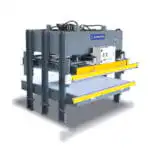
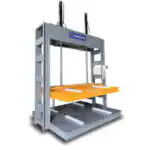
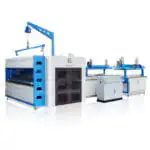
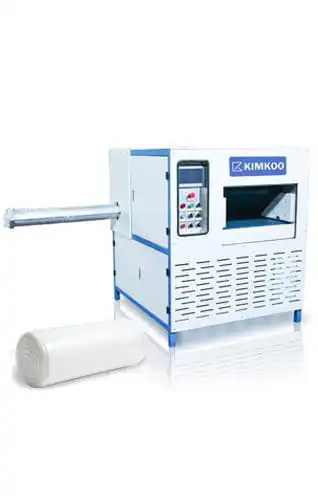
KIMKOO offers a full range of compression packing machines for sofas, foam blocks, layered foam, and resilient mattresses. Choose from fully automatic or semi-automatic models with functions like auto bagging, compression, sealing, folding, and roll-packing — all tailored to your packaging needs.
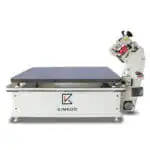
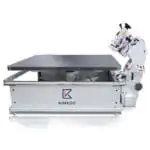
Precise and Durable Finishing with Mattress Tape Edge Machines
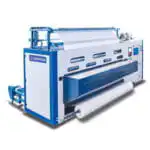
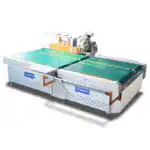
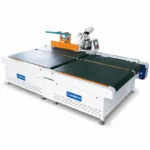
KIMKOO offers automatic and semi-automatic tape edge machines with chain or lock stitch options. Compatible with SINGER 300U, PFAFF 5625, and TYPICAL sewing heads for smooth, durable edge stitching across a wide range of mattress styles.
KIMKOO offer multiple types of pocket spring assembly machines — some can connect with 2 coilers, and others up to 3. Freely combine with pocket spring coiling machines of different speeds. Easily set up a 1-to-1, 1-to-2, or 1-to-3 production line to match your capacity. Customize your setup today!
Mattress Packaging Solutions Tailored to Your Needs
KIMKOO offers a versatile range of mattress packaging machines, with optional functions including auto bagging, compression, folding, and roll-packing. Whether you need to wrap, flatten, fold, or roll, our solutions help protect your mattresses, save space, and improve packaging efficiency. Designed to fit various mattress types and workflows.
Compress & Roll Pack Sofas, Foam, and Mattresses with Ease
KIMKOO offers a full range of compression packing machines for sofas, foam blocks, layered foam, and resilient mattresses. Choose from fully automatic or semi-automatic models with functions like auto bagging, compression, sealing, folding, and roll-packing — all tailored to your packaging needs.
Precise and Durable Finishing with Mattress Tape Edge Machines
KIMKOO offers automatic and semi-automatic tape edge machines with chain or lock stitch options. Compatible with SINGER 300U, PFAFF 5625, and TYPICAL sewing heads for smooth, durable edge stitching across a wide range of mattress styles.
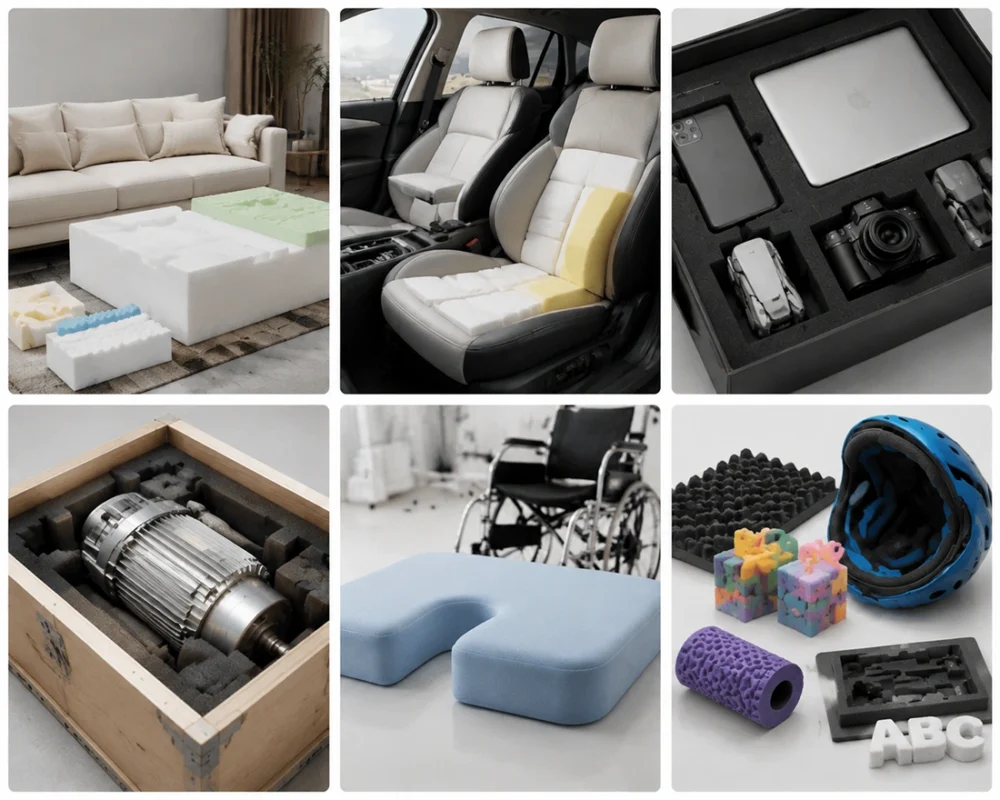
Foam materials have become an essential component in modern manufacturing due to their lightweight structure, flexibility, durability, and excellent cushioning performance. From mattresses and furniture to automotive interiors, electronic protection, and industrial packaging, foam materials are used in countless applications.
However, different products require different foam shapes, thicknesses, and cutting accuracy. This is where advanced foam cutting technology plays an important role.
Modern foam processing is no longer limited to simple manual cutting. With the development of automated cutting systems, manufacturers can now achieve precise dimensions, complex shapes, smooth surfaces, and high production efficiency while processing various foam materials.
As a professional manufacturer of mattress and foam processing equipment, Kimkoo Mattress Machinery provides advanced foam cutting solutions designed to meet the requirements of different industries, materials, and production environments.
What Is Foam Cutting Technology?
Foam cutting technology refers to the methods and equipment used to divide, shape, trim, or customize foam materials into specific sizes and designs.
Unlike traditional cutting methods, modern foam processing systems are designed to handle different foam densities, thicknesses, and structures while maintaining high accuracy.
Depending on production requirements, foam can be processed into:
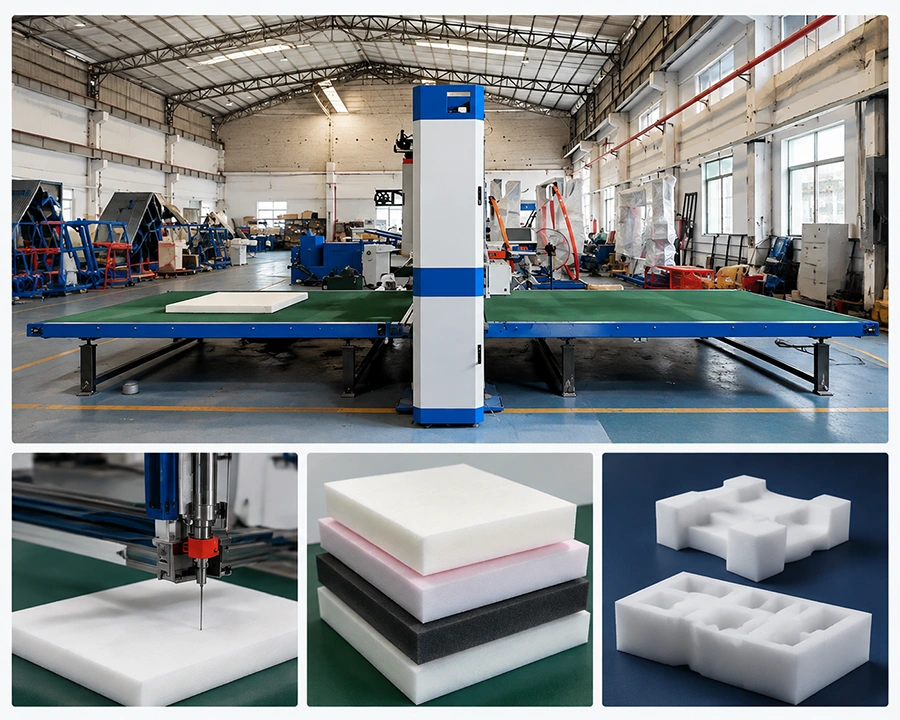
Thin foam sheets
Foam blocks
Custom 2D profiles
Complex 3D shapes
Curved and irregular designs
Precision components
Advanced cutting technology can process foam thicknesses from only a few millimeters to large foam blocks over one meter in height.
Some precision systems can achieve cutting thicknesses as low as 1mm, making them suitable for applications requiring extremely accurate material control.
Main Types of Foam Cutting Methods
Different industries require different cutting approaches. Choosing the correct cutting method depends on foam material, product design, production volume, and required precision.
1. CNC Contour Cutting Technology
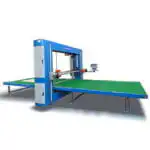
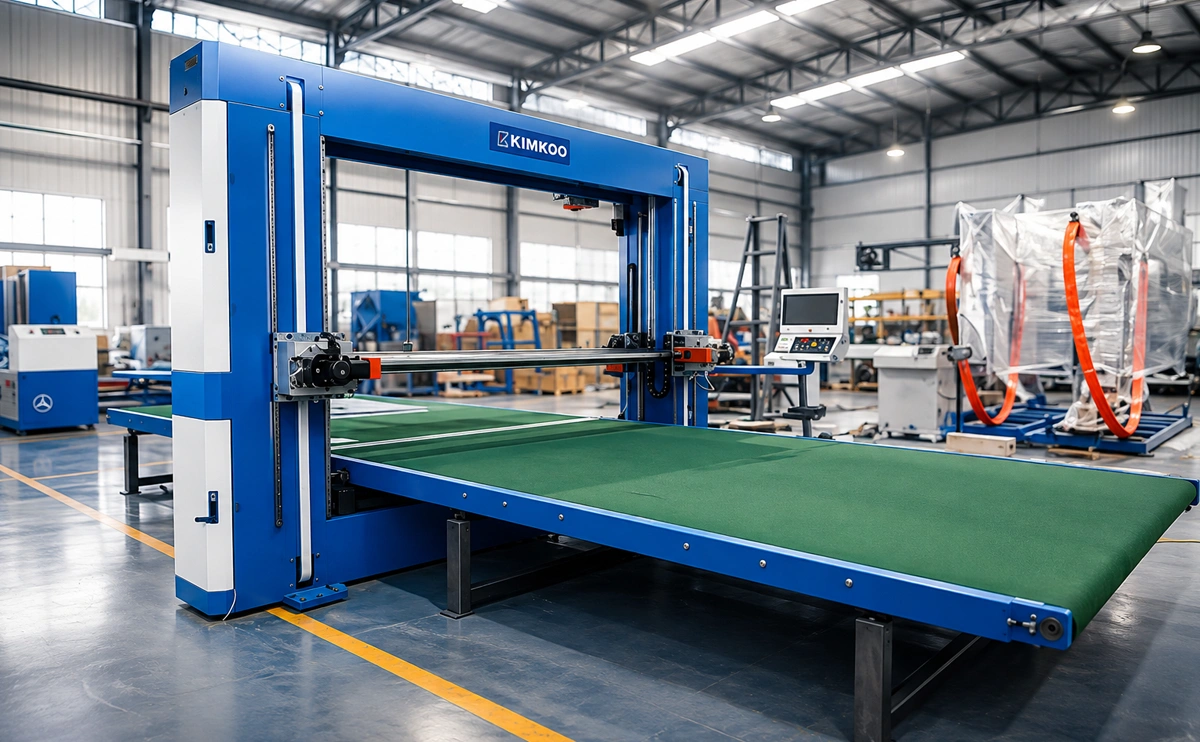
CNC contour cutting is one of the most advanced foam processing methods available today. It uses computer-controlled cutting systems to create complex shapes and customized designs with high precision.
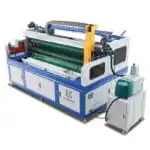
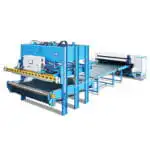
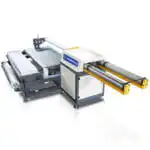
A foam contour cutting machine is commonly used by manufacturers that require accurate 2D and 3D foam shaping, especially for customized products and complex geometries.
This technology is especially suitable for manufacturers producing:
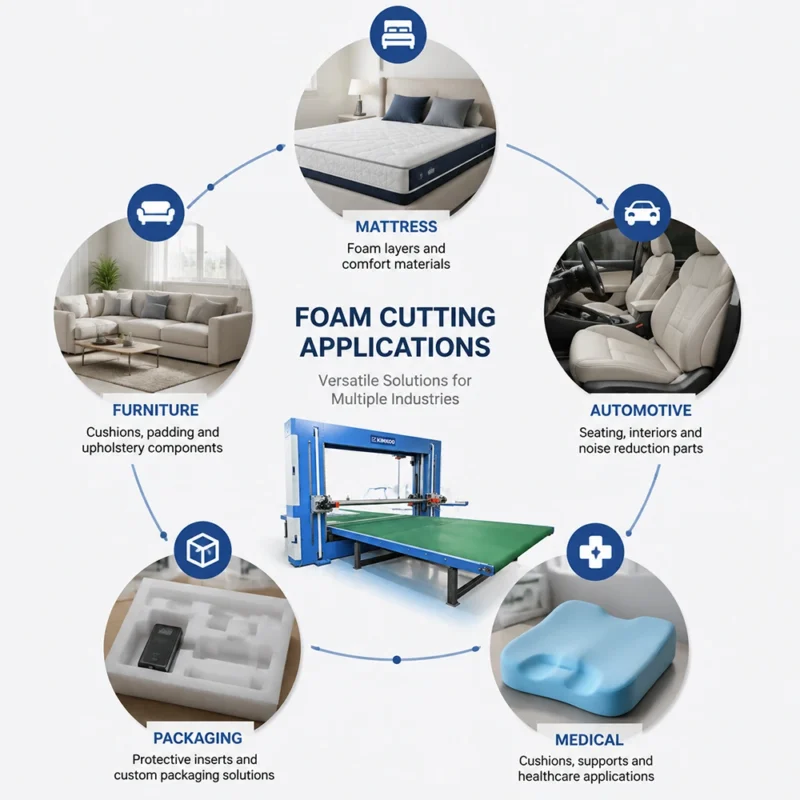
• Automotive foam components • Customized furniture parts • Special packaging inserts • Medical and industrial foam products
A CNC contour cutting system can process materials such as:
• PU foam • PE foam • PVC foam • Latex foam • Rebond foam • High resilience foam
With CAD-based software, designers can directly convert digital drawings into cutting programs, allowing accurate production of complicated 2D and 3D foam structures.
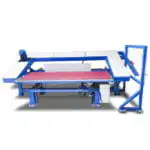
2. Horizontal Foam Cutting Technology
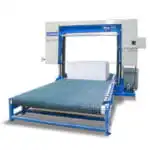
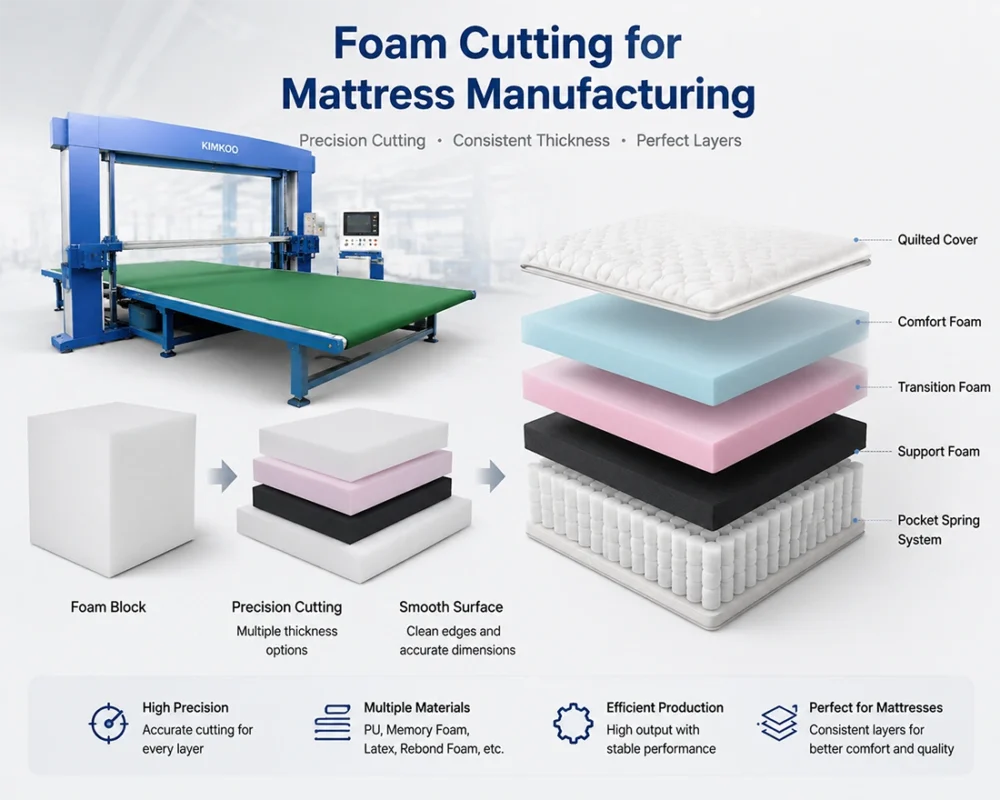
Horizontal cutting is mainly used for slicing large foam blocks into uniform sheets with consistent thickness.
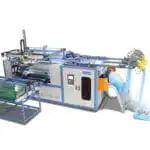
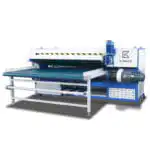
A horizontal foam cutting machine is commonly used in foam processing facilities where manufacturers need precise thickness control and efficient sheet production from large foam blocks.
This method is widely used when manufacturers need:
The cutting thickness can be precisely adjusted according to production requirements, making it suitable for both thick blocks and thin foam layers.
Advanced horizontal cutting systems can achieve stable cutting performance through:
• Servo motor control • Digital thickness adjustment • Conveyor transportation systems • Optional vacuum stabilization systems
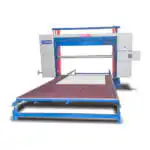
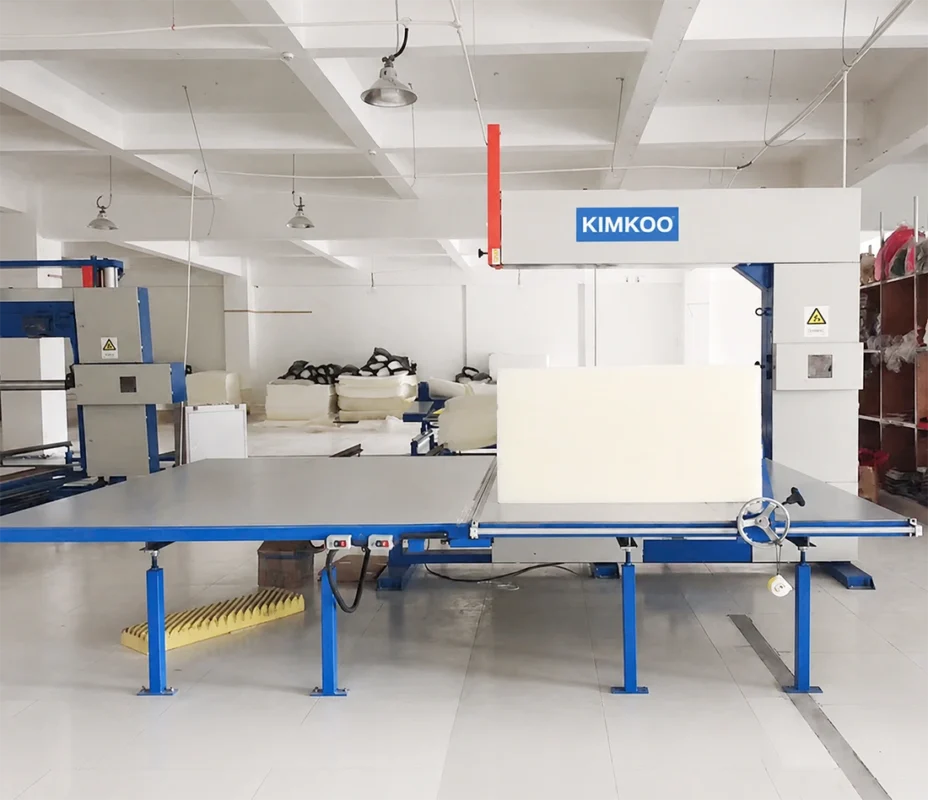
3. Vertical Foam Cutting Technology
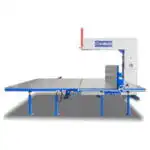
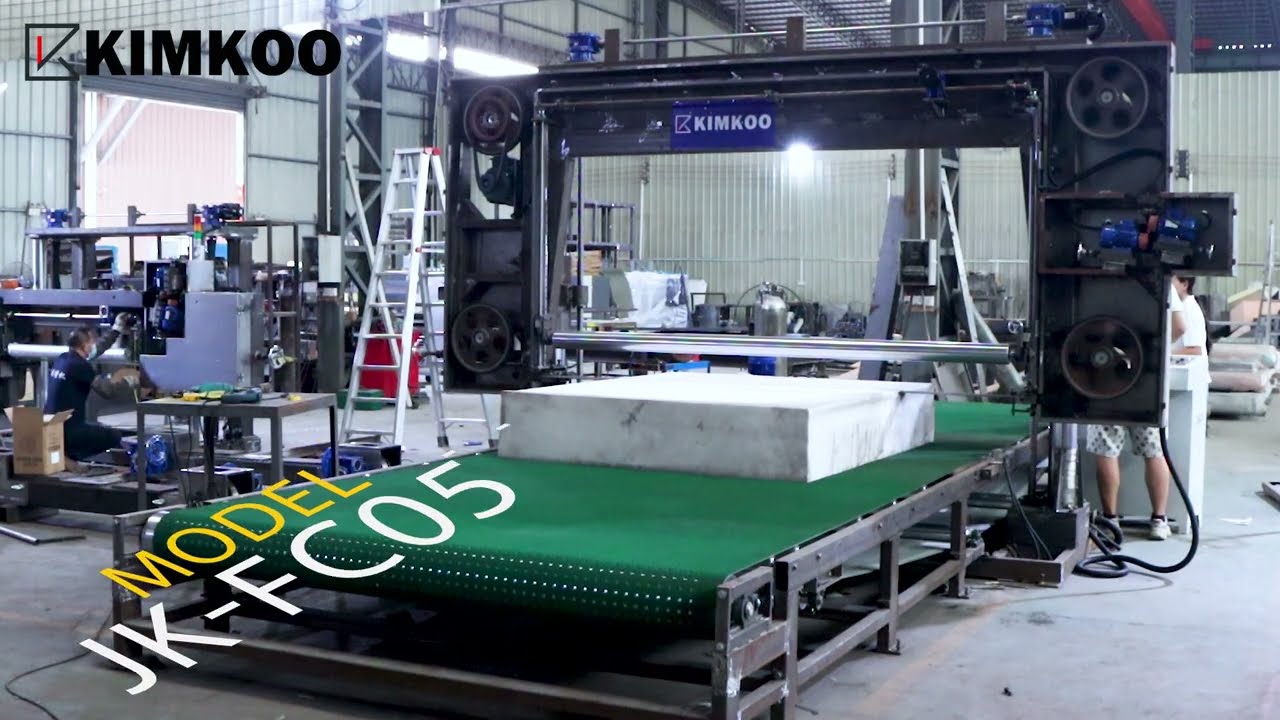
Vertical cutting technology is commonly used for foam block trimming, sizing, and straight cutting.
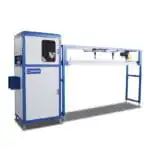
A vertical foam cutting machine is designed for manufacturers that need flexible cutting operations, especially when processing large foam blocks into customized dimensions and specific shapes.
Compared with horizontal cutting methods, vertical cutting provides greater flexibility for producing different foam sizes while maintaining stable cutting accuracy.
Typical applications include:
• Foam block sizing • Furniture foam production • Mattress component preparation • Industrial material processing
Besides foam, vertical cutting technology can also process various flexible materials, including:
• EVA • PE • PVC • Rubber • Leather • Non-woven fabrics • Plastic sheets
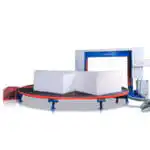
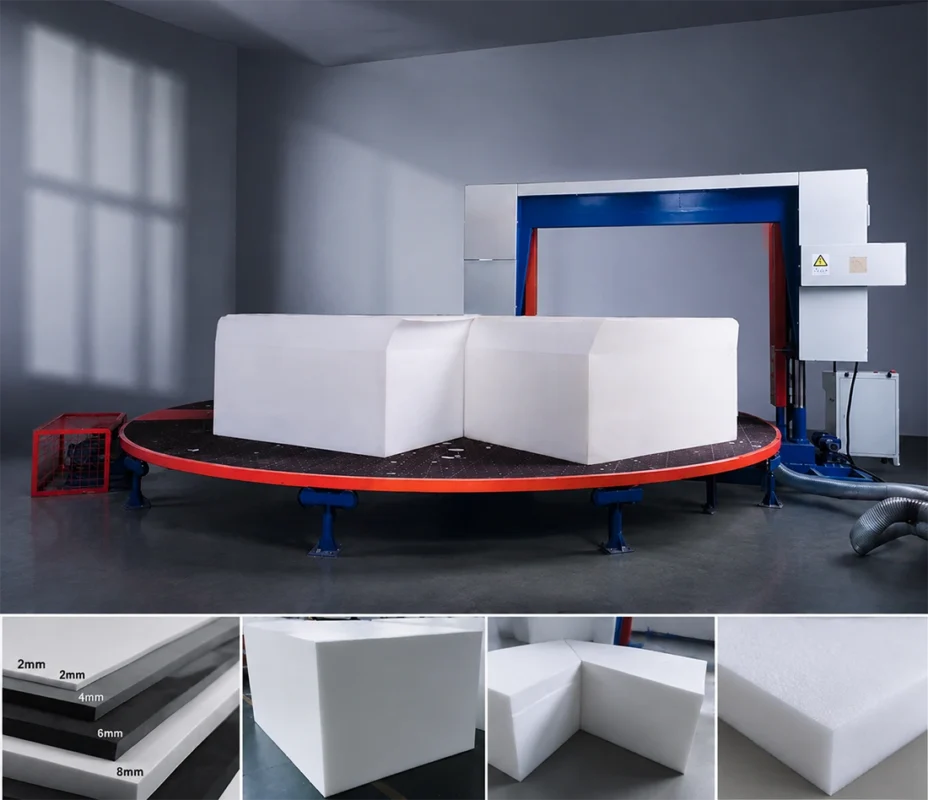
4. Circular Foam Cutting Technology
Circular cutting technology is designed for efficient processing of multiple foam blocks with consistent cutting performance.
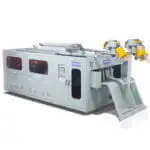
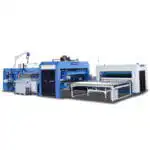
A circular foam cutting machine is commonly used in high-volume foam production where manufacturers need continuous cutting operations and efficient processing of multiple foam blocks.
Using a rotating cutting table, manufacturers can achieve stable cutting accuracy while improving productivity for repetitive foam processing tasks.
Manufacturers can create accurate foam inserts based on product dimensions, improving safety and presentation.
Medical and Healthcare Products
Foam materials are widely used in:
Medical cushions
Support products
Rehabilitation equipment
Healthcare accessories
Precise cutting ensures comfort, consistency, and product reliability.
Consumer Goods and Specialty Products
Foam cutting technology is also applied in many smaller and customized products, including:
Sports equipment
Toys
Acoustic panels
Craft products
Display materials
Protective accessories
How to Choose the Right Foam Processing Method?
When selecting a foam cutting solution, manufacturers should consider several factors:
Material Type
Different materials require different cutting methods.
For example:
• Soft PU foam may require different settings compared with dense rebond foam. • Latex foam requires precise cutting control due to its elasticity.
Product Shape
Simple sheets and blocks usually require different solutions compared with complex 3D designs.
Production Volume
High-volume factories often benefit from automated cutting systems, while customized production may require flexible CNC solutions.
Cutting Accuracy
Industries such as electronics, automotive, and medical products usually require higher precision compared with general foam applications.
Advanced Foam Processing Solutions from Kimkoo Mattress Machinery
With years of experience in mattress machinery and foam processing equipment, Kimkoo Mattress Machinery provides reliable solutions for manufacturers worldwide.
Our foam processing equipment is designed for:
High cutting accuracy
Stable production performance
Flexible material compatibility
Efficient industrial manufacturing
Kimkoo supports customers in industries including mattresses, furniture, automotive components, packaging, and customized foam production.
By combining advanced automation technology with practical manufacturing experience, Kimkoo helps businesses improve production efficiency and achieve consistent foam processing quality.
Choosing the Right Foam Cutting Solution for Your Business
Selecting the right foam processing method depends on your material type, product design, production volume, and accuracy requirements.
From simple foam sheet cutting to complex 3D contour shaping, modern cutting technologies provide manufacturers with more flexibility and efficiency.
At Kimkoo Mattress Machinery, we help customers choose suitable foam processing solutions based on their production requirements, including different cutting methods for mattresses, furniture, automotive components, packaging, and other foam-based products.


 KIMKOO offer multiple types of pocket spring assembly machines — some can connect with 2 coilers, and others up to 3. Freely combine with pocket spring coiling machines of different speeds. Easily set up a 1-to-1, 1-to-2, or 1-to-3 production line to match your capacity. Customize your setup today!




 Technical Support
 Services
 Custom Development Support
 FAQ
FAQ
