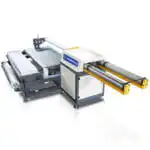
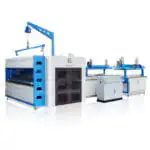
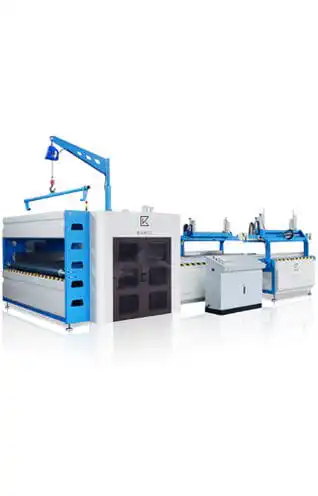
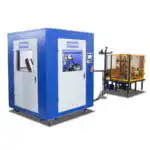
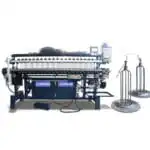
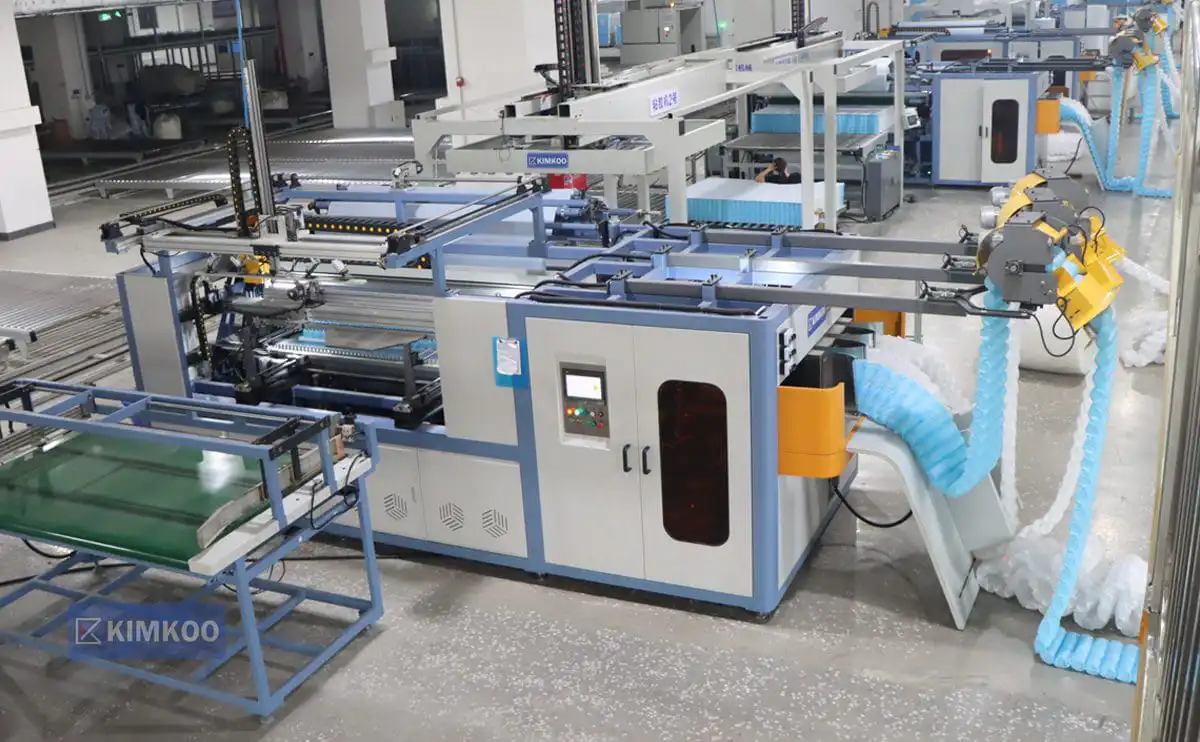
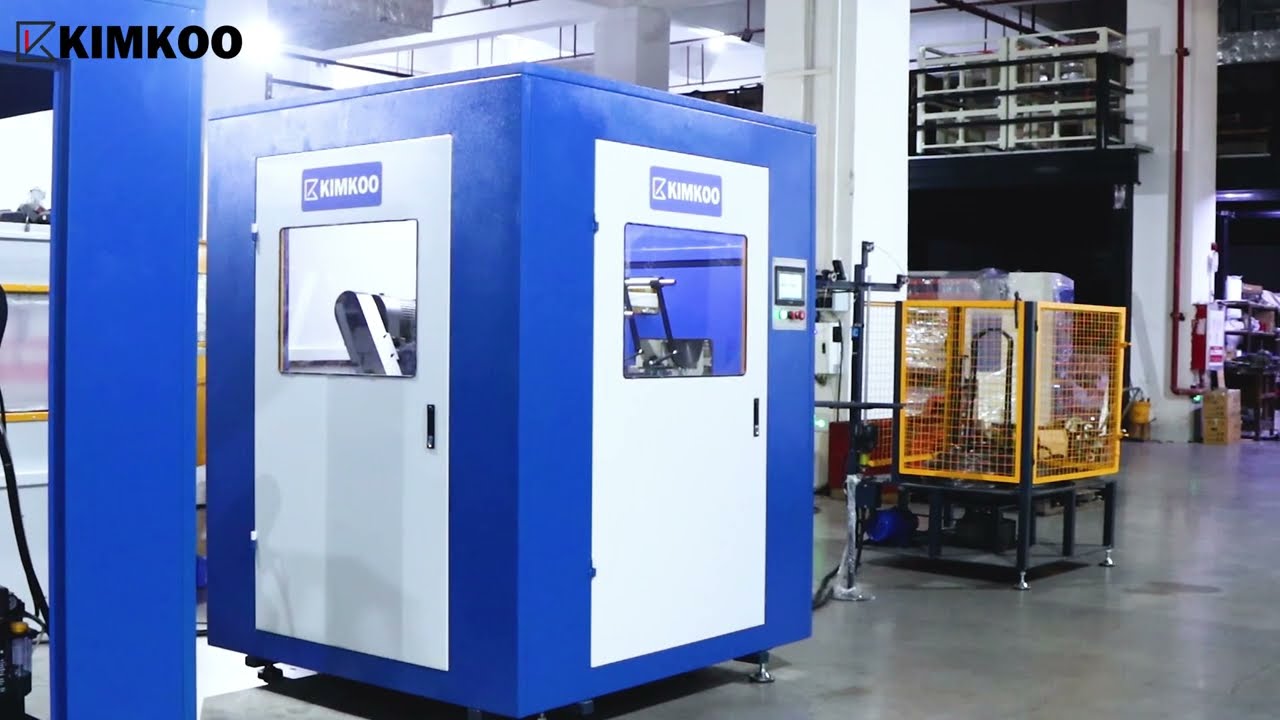
KIMKOO offer multiple types of pocket spring assembly machines — some can connect with 2 coilers, and others up to 3. Freely combine with pocket spring coiling machines of different speeds. Easily set up a 1-to-1, 1-to-2, or 1-to-3 production line to match your capacity. Customize your setup today!
Mattress Packaging Solutions Tailored to Your Needs
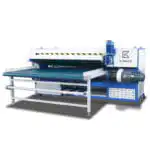
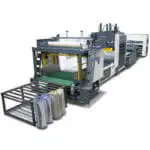
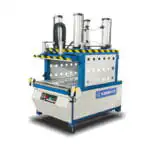
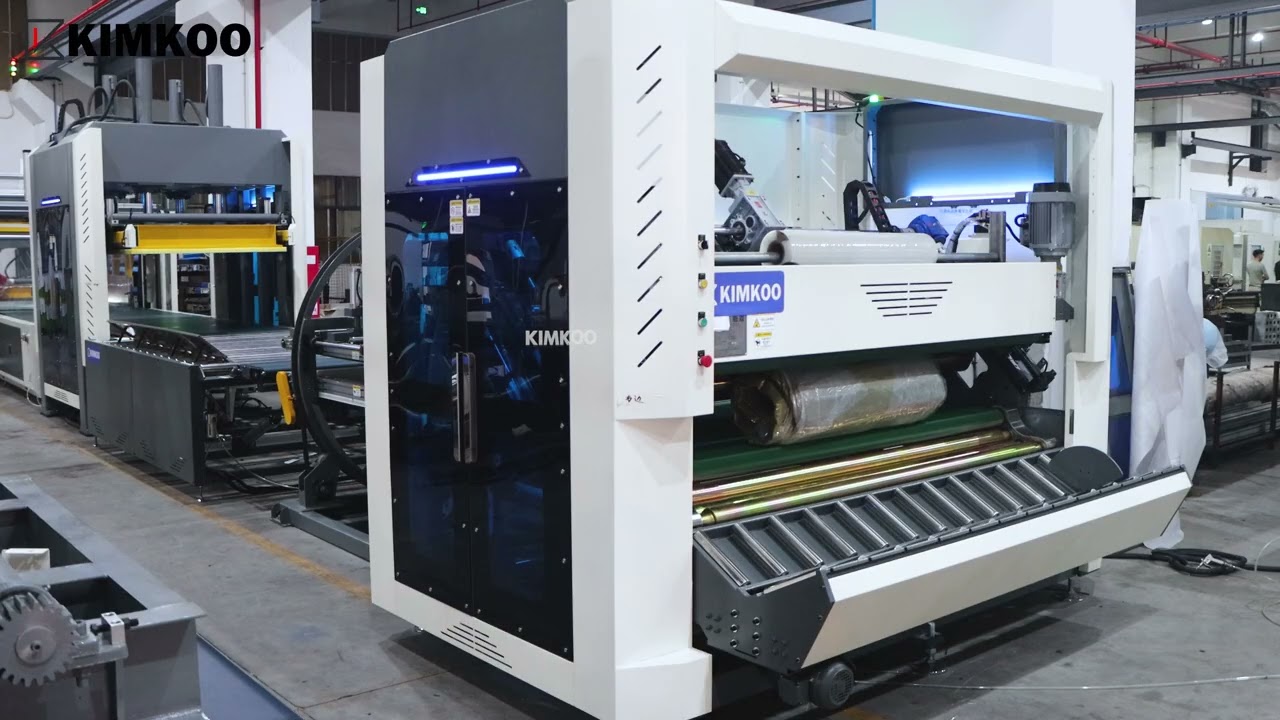
KIMKOO offers a versatile range of mattress packaging machines, with optional functions including auto bagging, compression, folding, and roll-packing. Whether you need to wrap, flatten, fold, or roll, our solutions help protect your mattresses, save space, and improve packaging efficiency. Designed to fit various mattress types and workflows.
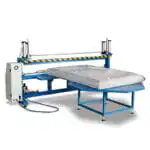
Compress & Roll Pack Sofas, Foam, and Mattresses with Ease
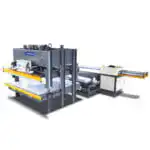
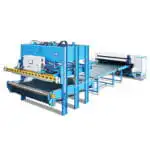
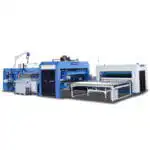
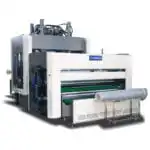
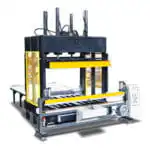
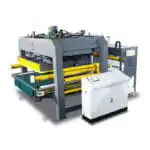
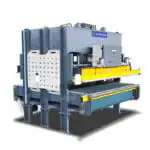
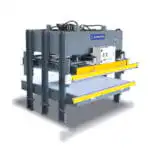
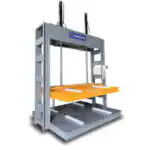
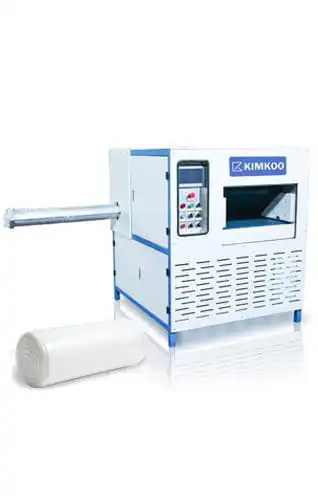
KIMKOO offers a full range of compression packing machines for sofas, foam blocks, layered foam, and resilient mattresses. Choose from fully automatic or semi-automatic models with functions like auto bagging, compression, sealing, folding, and roll-packing — all tailored to your packaging needs.
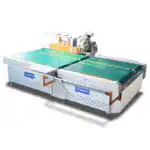
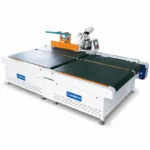
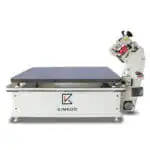
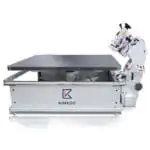
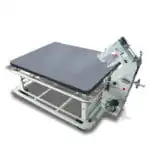
Precise and Durable Finishing with Mattress Tape Edge Machines
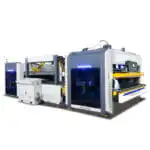
KIMKOO offers automatic and semi-automatic tape edge machines with chain or lock stitch options. Compatible with SINGER 300U, PFAFF 5625, and TYPICAL sewing heads for smooth, durable edge stitching across a wide range of mattress styles.
KIMKOO offer multiple types of pocket spring assembly machines — some can connect with 2 coilers, and others up to 3. Freely combine with pocket spring coiling machines of different speeds. Easily set up a 1-to-1, 1-to-2, or 1-to-3 production line to match your capacity. Customize your setup today!
Mattress Packaging Solutions Tailored to Your Needs
KIMKOO offers a versatile range of mattress packaging machines, with optional functions including auto bagging, compression, folding, and roll-packing. Whether you need to wrap, flatten, fold, or roll, our solutions help protect your mattresses, save space, and improve packaging efficiency. Designed to fit various mattress types and workflows.
Compress & Roll Pack Sofas, Foam, and Mattresses with Ease
KIMKOO offers a full range of compression packing machines for sofas, foam blocks, layered foam, and resilient mattresses. Choose from fully automatic or semi-automatic models with functions like auto bagging, compression, sealing, folding, and roll-packing — all tailored to your packaging needs.
Precise and Durable Finishing with Mattress Tape Edge Machines
KIMKOO offers automatic and semi-automatic tape edge machines with chain or lock stitch options. Compatible with SINGER 300U, PFAFF 5625, and TYPICAL sewing heads for smooth, durable edge stitching across a wide range of mattress styles.
If you are planning to manufacture mattresses or enter the mattress market, you must clearly understand how to make a mattress. Specifically, you need to decide which type of mattress you intend to produce — a foam mattress, a bonnell spring mattress, or a pocket coil mattress. In this guide, we will walk you step-by-step through how to make pocket coil mattresses, how to make bonnell spring mattresses, how to make foam mattresses, and finally how to pack mattresses for shipping and storage. We will also introduce the equipment needed, including machines from KIMKOO, to help you set up a professional production line.
How to Make a Pocket Coil Mattress
Step 1: Raw Materials Preparation
To start the production of a pocket coil mattress, you need to prepare all the required raw materials: high-quality steel wire (for the coils), non-woven fabric or woven fabric (for the pockets), mattress side fabric (Mattress Side Fabric) to wrap the four edges, comfort layers such as foam or latex, and cover fabrics (Top Fabric / Cover Fabric). A typical entry-level production might begin with a bulk purchase of steel wire (e.g., 10 tons) to ensure consistent supply.
Step 2: Pocket Spring Production
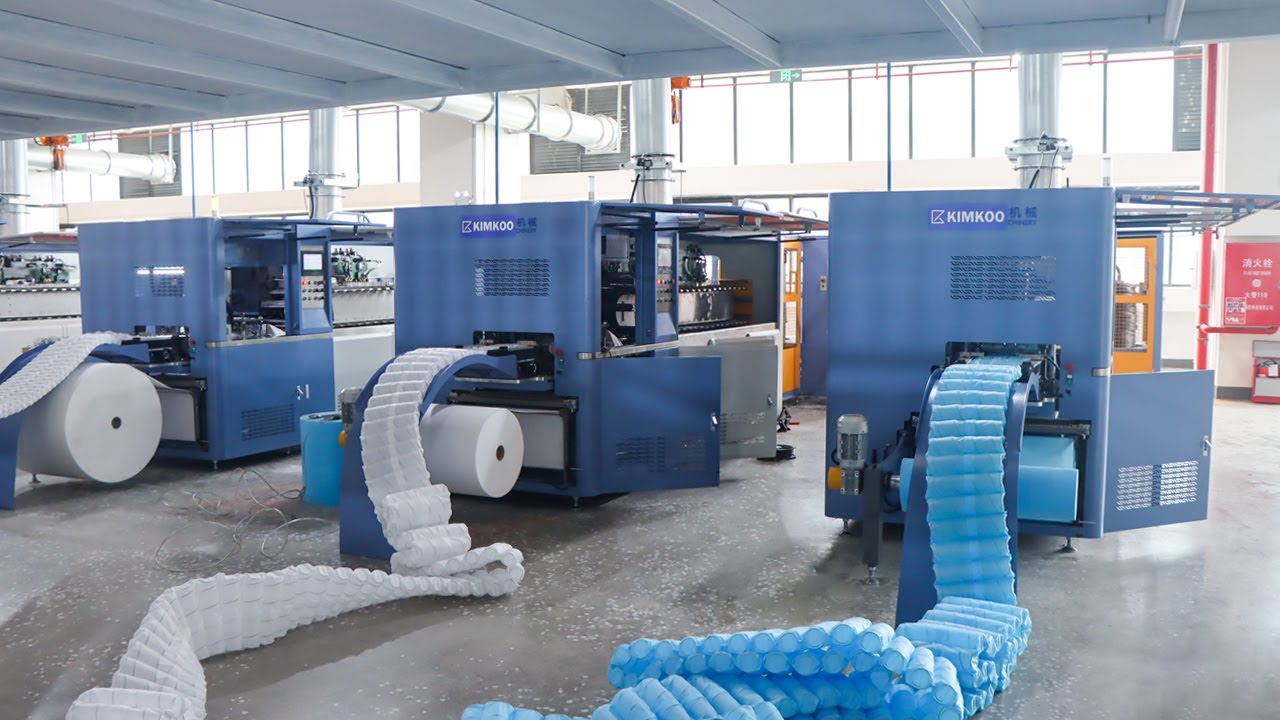
Next, you produce the individual pocket springs. Using a pocket spring coiling machine, the steel wire is coiled by CNC or automatic system into springs, then heat-treated, cooled, and inserted into individual fabric sleeves. Modern machines may utilize ultrasonically welded pockets for higher precision and better durability.
Step 3: Pocket Spring Unit Assembly
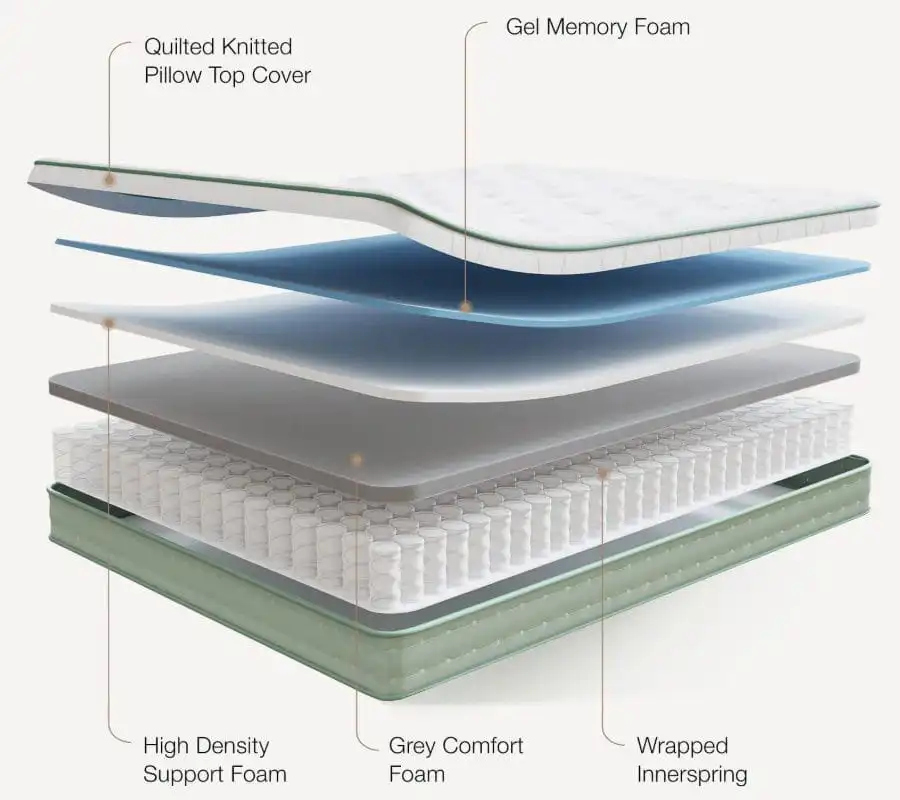
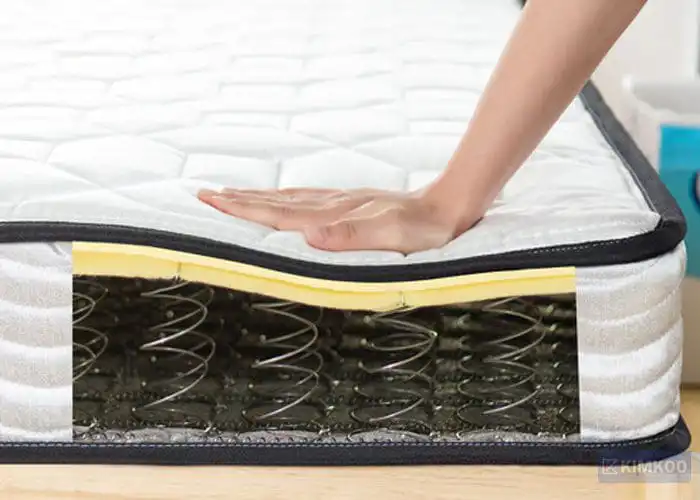
Once pocket springs are ready, you must assemble them into a mattress core unit (pocket spring unit). With a pocket spring assembly machine, you cut springs into rows matching mattress length and width, glue or ultrasonic-weld the rows together, apply border wires or edge support if needed, forming a stable spring unit. This spring unit is the heart of the pocket coil mattress.
Step 4: Layering Comfort Materials & Upholstery
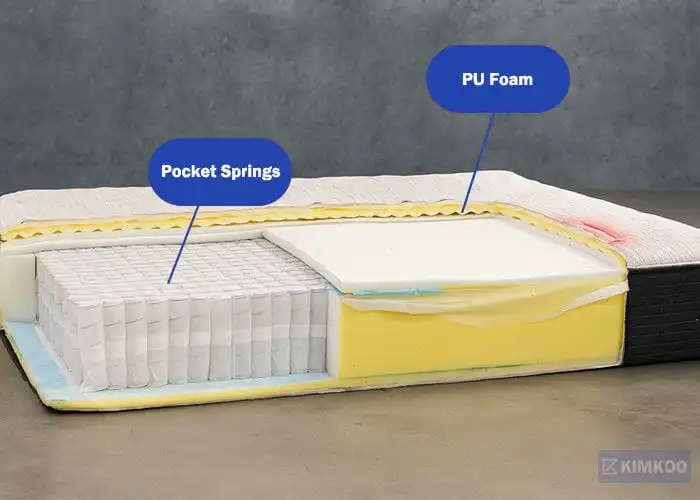
With the pocket spring unit in place, you stack comfort layers on top (and optionally below) such as foam, latex, or micro-coils. Then you place the unit into the mattress ticking: cover fabric + side panel fabric. The edges are sewn using a mattress tape edge machine that binds the top, bottom and side panels together.
Step 5: Quality Control and Final Steps
Before packaging, the mattress goes through quality checks: spring height variation, edge firmness, fabric stitching, overall feel. After passing inspection, it is ready for packaging and shipment.
Why pocket coil mattresses are popular:
They provide independent spring support, excellent motion isolation (e.g., one side compressed a lot little effect on the other side), and are preferred in the high-end market. Manufacturers investing in precision pocket spring machines gain competitive advantage.
How to Make a Bonnell Spring Mattress
Step 1: Raw Materials Preparation
As with pocket coil mattresses, begin by preparing steel wire, mattress side fabric, comfort layers (foam, latex, etc.), cover fabrics and other accessories.
Step 2: Bonnell Spring Manufacturing
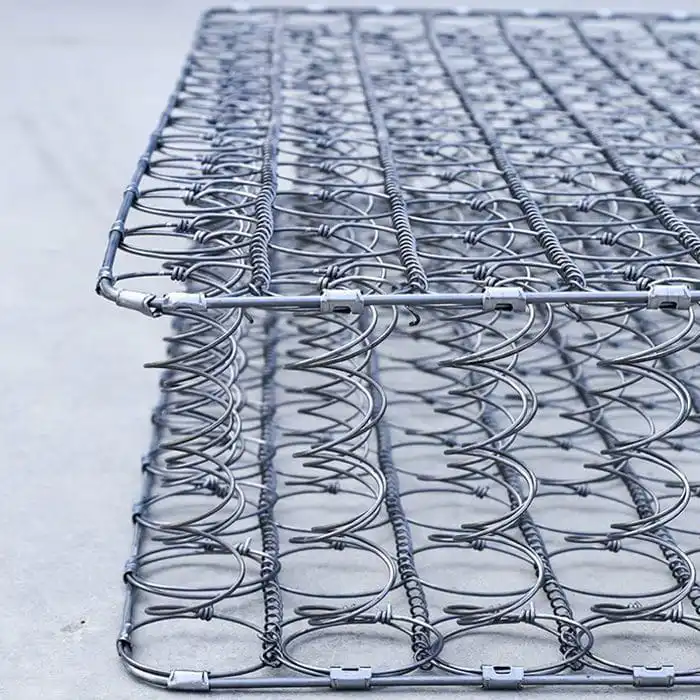
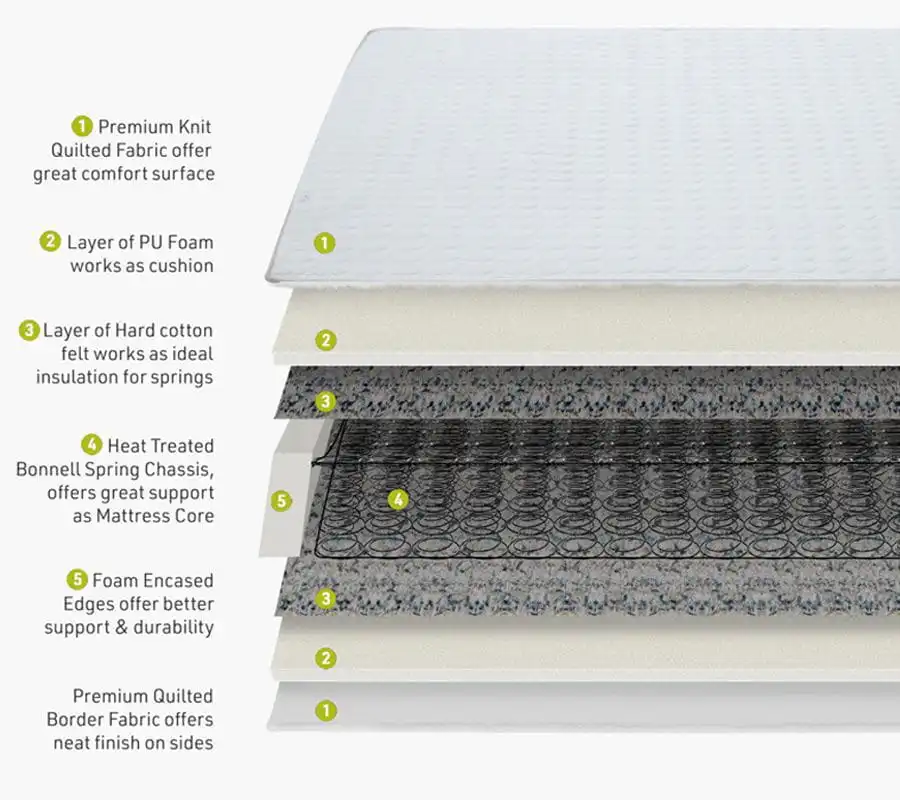
Using a bonnell spring coiling machine, the steel wire is coiled into hourglass-shaped springs, heat treated, cooled. These are the basic Bonnell springs.
Step 3: Bonnell Spring Unit Assembly
A bonnell spring assembly machine then strings the coils together with helical wires or ties to form the spring network (spring unit). The unit is framed with border wires or foam strips for edge support
Step 4: Layering Comfort Materials & Upholstery
Now stack foam or latex comfort layers on the spring unit. Then encase in fabric cover and sew the edges by tape edge machine. This assembles the mattress. While Bonnell spring mattresses generally provide less motion isolation than pocket coil types, they still offer cost-effective support and remain popular in many markets.
How to Make a Foam Mattress
Step 1: Foam Production
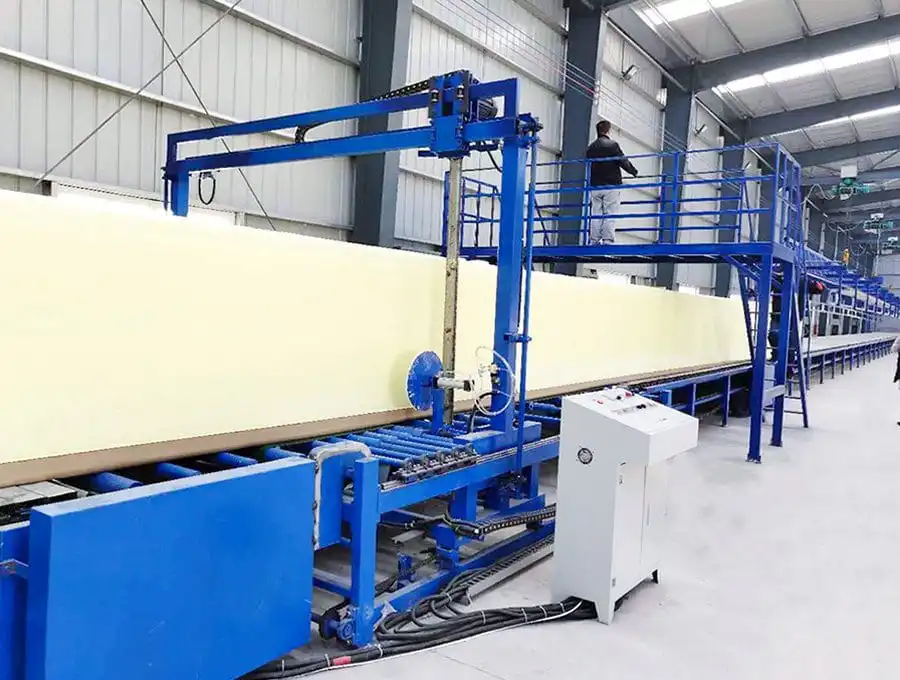
The process begins with producing or sourcing foam blocks (polyurethane foam, memory foam, or latex foam). According to industry sources, foam mattresses can start with a batch foaming machine followed by a cutting machine.
Step 2: Foam Cutting & Layering
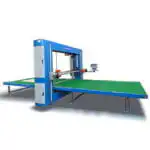
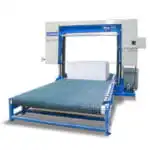
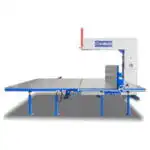
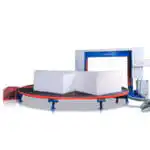
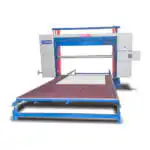
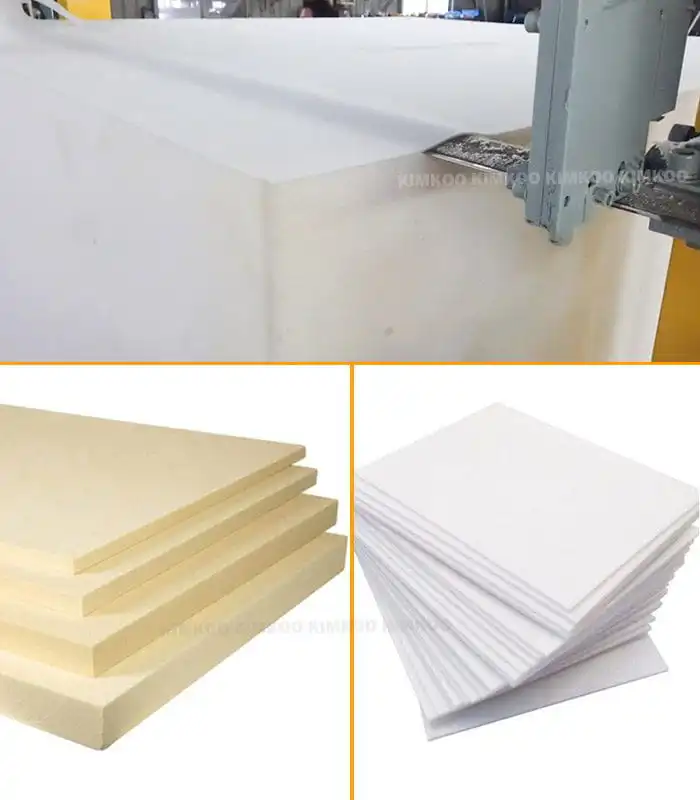
Cut the foam block to the required mattress size using a horizontal cutting machine. Then stack layers of different foam densities (e.g., high-density base layer + comfort layer) to create the core of the foam mattress. Many manufacturers add a water-resistant layer or comfort fabric.
Step 3: Covering & Assembly
After layering, wrap the foam core with knitted or woven cover fabrics. Use quilting machines if desired to add stitched patterns and aesthetic appeal. Then use the tape edge machine or other border machines to finish edges.
Step 4: Packaging & Shipment
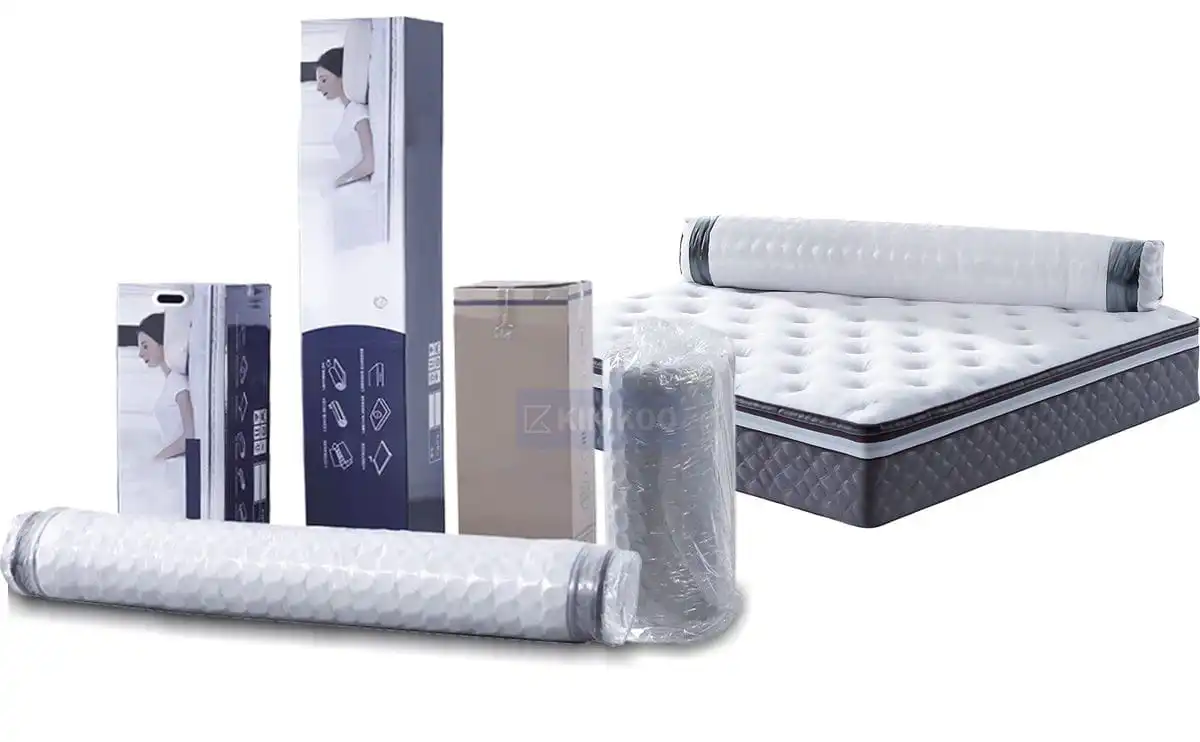
Since foam mattresses are relatively soft and compressible, they are ideal for “mattress-in-a-box” models: compressed, rolled, and shipped in cartons. This packaging convenience is a major trend in foam mattress manufacturing.
How to Pack a Mattress
Having produced the finished mattress, the next critical step is how to pack mattress for shipping and storage. Proper packaging ensures protection, cost-efficient logistics, and compliance with wholesaler or e-commerce requirements (e.g., Amazon).
Use a mattress packing machine which can wrap the mattress in film, compress, fold and roll pack it.
Common packaging options: compression & sealing (reduce volume), roll packing (ideal for mattress-in-a-box models). Many factories also offer surface wrapping or boxed packaging for export markets.
Ensure minimal damage during transit (use protective film, kraft paper)
Optimize logistics space (roll-packing can reduce volume significantly)
Efficiency in warehouse and e-commerce (pre-sealed film and direct pallet loading)
Why Equipment & Automation Matter
In modern mattress manufacturing, automation and precise machinery are no longer optional—they are critical for consistency, efficiency and quality control. For example, in the production of pocket coil mattresses, specializedpocket spring machines ensure that each individual coil is produced with consistent size, tension and placement, which directly affects mattress performance and durability.
Investing in machines such as those from KIMKOO enhances production speed, reduces labor costs, improves product repeatability and ultimately supports a strong brand reputation.
Conclusion
If you want to manufacture mattresses, it’s essential to know how to make a mattress of different types: foam, bonnell spring, and pocket coil. Each type has its own process flows, equipment needs and market positioning. From raw-material preparation-to coil or foam production-to assembly-to final packaging, each step must be managed with precision to deliver a high-quality product.
By choosing the right machinery—such as KIMKOO’s pocket spring machines, bonnell spring machines, tape edge machines, mattress packing machines—you are well-positioned to build an efficient, modern mattress manufacturing line.
Whether you choose to produce foam, bonnell or pocket coil mattresses, following this guide will help you structure your process and make informed decisions.




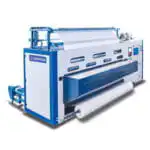
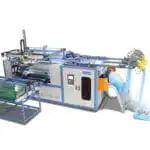
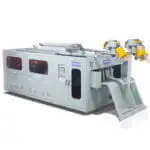
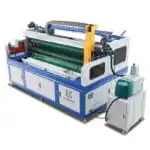
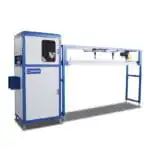
 KIMKOO offer multiple types of pocket spring assembly machines — some can connect with 2 coilers, and others up to 3. Freely combine with pocket spring coiling machines of different speeds. Easily set up a 1-to-1, 1-to-2, or 1-to-3 production line to match your capacity. Customize your setup today!









 Technical Support
 Services
 Custom Development Support
 FAQ
FAQ
